
Taking organs from still live donors? ‘Horrifying’ report raises concerns in New Jersey
🔴 New report finds surge in organ donations after circulatory death
🔴 Some patients were cut open while alive, the New York Times finds
🔴 Federal investigation reveals more disturbing details
A troubling report from the New York Times finds that some hospitals throughout the country may be unethically harvesting organs from people who are still alive and recovering.
The investigation has brought new attention to donations after circulatory death, which have become increasingly common in recent years.
Most organ donations are done after brain death. But circulatory death donors may have some brain activity and doctors have determined they will not recover.

In 2024, DCD accounted for one-third of all organ donations, the New York Times reported. There were 20,000 organs harvested after circulatory death, triple the number from 2019.
Concerningly, dozens of medical workers in 19 states told the Times that they had seen disturbing DCD cases. That includes some patients whose hearts were still beating when harvesting began.
In New Jersey, however, the NJ Sharing Network said all organ donations after circulatory death that it had overseen faced no issues.

Organ donation in New Jersey
More than 3 million New Jersey residents are registered organ donors, according to the NJ Sharing Network. The organ procurement organization coordinates transplants throughout New Jersey.
Last year, 297 donors in New Jersey provided 743 organs to people on the waitlist.
Donations after circulatory death have accounted for 28% of organ donations coordinated by the NJ Sharing Network, according to spokesman Gary Mignone.
"Each of these donations followed a highly regulated, hospital-led process and resulted in successful lifesaving transplants for patients in need," Mignone said.
READ MORE: NJ Sharing Network pushes multicultural organ donations
Mignone said none of the cases in the New York Times article were related to New Jersey, including the NJ Sharing Network and local hospitals.
The Times report found that some medical staff at hospitals in other states had rushed decisions to prioritize harvesting organs over the life of the patient.
Under federal law, it's up to independent medical teams at hospitals to declare that a patient is dead.
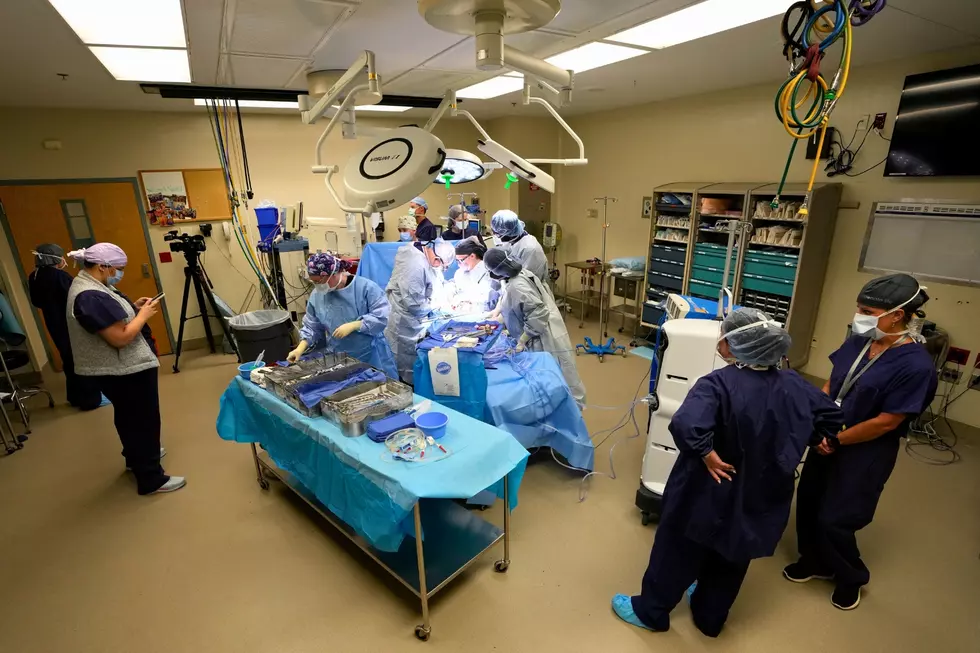
But according to a federal Health Resources and Services Administration investigation, an organ procurement organization in the Midwest had blurred the lines and pushed those medical teams to make premature decisions.
Mignone said that doesn't happen in New Jersey. The NJ Sharing Network's staff doesn't play any role in end-of-life care or pronouncement of death.
"Organ donation in New Jersey is safe, ethical, and highly regulated," Mignone said.
Around 4,000 people in New Jersey are on the waitlist for an organ donation and 86% of them need a kidney transplant, according to RWJ Barnabas Health.
The average wait time is three to five years.
What are New Jersey's laws around organ donation?
Like the rest of the country, New Jersey is an opt-in state for organ donation. This means residents are not automatically registered as organ donors, as is the case in other countries such as Spain or France.
The easiest way to become an organ donor is by signing up online through Donate Life New Jersey.
Another option for those who prefer registering in person is to opt in while getting or renewing a driver's license at the Motor Vehicle Commission.
In New Jersey, a registered donor must reconfirm their decision each time they renew their ID.
Once a person opts in to become an organ donor, it's a legally binding decision. If they die, next-of-kin cannot override their choice.
Federal investigation into organ donation
One day after the New York Times report, the U.S. Department of Health and Human Services announced it would reform the organ transplant system.
The HHS referenced the federal HRSA investigation, which examined 351 cases in parts of Kentucky, Ohio, and West Virginia where organ donations were approved but not completed.
At least 28 of those patients may have been alive when organ harvesting was started, federal officials said.
“Our findings show that hospitals allowed the organ procurement process to begin when patients showed signs of life, and this is horrifying,” Secretary Robert F. Kennedy, Jr. said.
The HHS has directed the organ procurement organization connected to those cases to make several changes to its policies or face decertification.
Report a correction 👈 | 👉 Contact our newsroom
The Top 30 Roller Coasters in New Jersey
Gallery Credit: Dan Zarrow
Must-visit NJ spots for RHONJ fans
Gallery Credit: Erin Vogt
More From New Jersey 101.5 FM