

New Jersey schools go phone-free bell-to-bell — what it means for your kid
New Jersey’s Bell-to-Bell Cellphone Ban: What the New Guidance Means for Students, Parents, and Schools
When Gov. Phil Murphy signed a school cellphone ban into law earlier this month, there were many questions about what that ban would entail and how much latitude local districts would have in crafting their own policies.
New Jersey has joined a growing number of states that promise phone-free learning from the first bell to the last.
The New Jersey Department of Education is now rolling out updated guidance as districts across the Garden State are gearing up to reimagine how school days work without constant pings, scrolling, and the distraction of social media in the classroom.
But what exactly do the new state guidelines say? And how much freedom will local school boards have to tailor policies for their own communities? Here’s a breakdown for parents, students, teachers, and community members.
What the Updated NJDOE Guidance Actually Requires
The NJDOE’s updated “Guidance for Schools on Student Use of Internet-Enabled Devices” was released on Jan. 15 to help districts implement the new law (P.L.2025, c.195). The core requirement is straightforward — every board of education must adopt a bell-to-bell policy that prohibits students from using personal cellphones and other internet-enabled devices during the entirety of the school day, including instructional time, lunch, recess, and transitions; unless an exception applies.
Under the guidance released by the NJDOE:
📲 Cellphones and related devices (smartphones, smartwatches, tablets, etc.) are considered “internet-enabled devices,” and districts must define them clearly in local policies.
📲 Non-academic use is prohibited from drop-off to dismissal — that’s the bell-to-bell part of the rule.
📲 Policies must also apply to device use on school buses or at school-sponsored events when students are under school supervision.
Exceptions and Student Needs: Room for Common Sense Flexibility
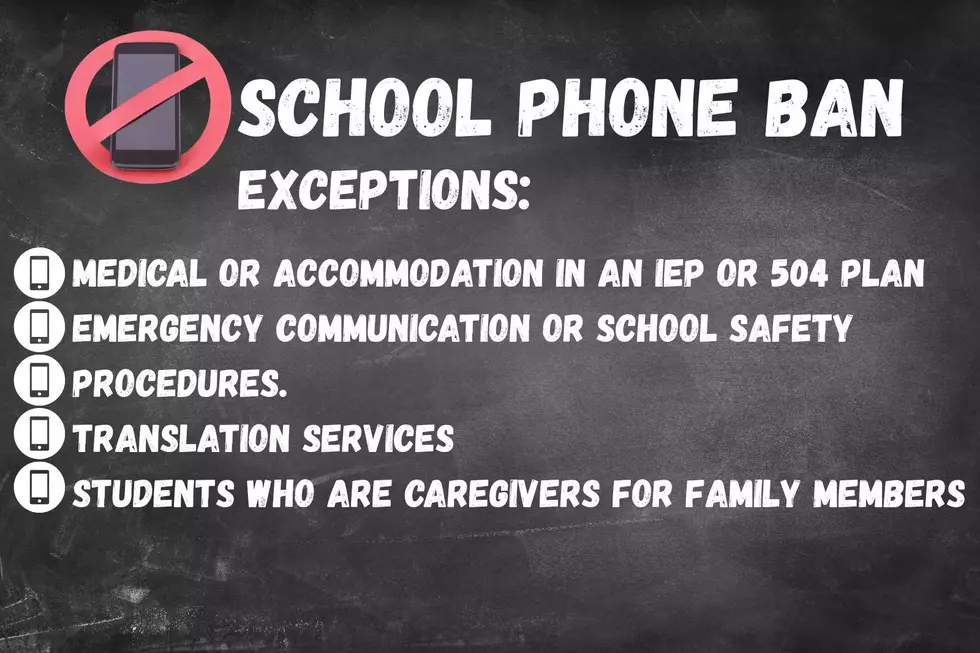
The guidance doesn't treat phones like dangerous contraband — there are thoughtful exceptions local policies must account for. Districts must allow student use of internet-enabled devices during the day in clearly defined cases, including:
📲 When required to support a student’s health (with medical documentation).
📲 For students who need phones for medical or accommodation reasons in an IEP or 504 plan.
📲 For emergency communication or school safety procedures.
📲 For translation services or students who are caregivers for family members.
These exceptions ensure that students with genuine needs — from glucose monitoring to crisis communication — aren’t unfairly affected by a blanket rule.
How Districts Will Implement Bell-to-Bell Policies
One of the biggest questions for educators and families right now is how schools will carry this out in real life. The guidance lays out a menu of options, but doesn’t prescribe a one-size-fits-all approach:

Storage and Supervision Options
📲 Districts can choose from different ways to manage devices during the day
📲 Locked pouch systems where students hand over devices upon entry, which are unlocked at dismissal.
📲 School-managed lockers or bins to hold devices.
📲 Classroom storage stations where teachers help manage where devices go.
📲 Student storage (e.g., in backpacks or personal lockers) with clear expectations that they remain off and out of sight.
This is where a lot of local nuance will come into play: capacity, staffing, building layout, grade levels, and community values will influence choices. A district with 30,000 students may opt for centralized lockers and staff roles devoted to logistics, while a smaller suburban district might ask students to stow phones in backpacks with periodic staff checks.
Age and Grade-Level Considerations
The guidance is developmentally informed. For young learners, K-5, the focus is on minimizing distractions and fostering in-person social engagement. For middle and high school students, districts are encouraged to balance students’ autonomy with clear rules during instructional time while offering structured opportunities for device use at non-academic moments, like lunch.
Communication Matters
A policy isn’t fully implemented until everyone knows what it is. The guidance emphasizes clear, repeated communication to families, students, and staff through handbooks, orientations, newsletters, and digital platforms, so everyone understands expectations, consequences, and the rationale behind them.
Local Control: What School Boards Can Decide
Here’s where the rubber meets the road — while the state law and guidance set boundaries, local boards have significant latitude to craft policies that fit their communities, as long as they stay aligned with statewide rules. That includes:
📲 Choosing which storage option works best for school size and resources.
📲 Designing enforcement strategies and consequences that reflect local priorities and student needs.
📲 Providing opportunities for device use outside instructional periods (e.g., lunch zones, courtyard areas).
📲 Building in additional protections or accommodations beyond the minimum state requirements.
This means a district like Cherry Hill might decide on a different storage model or enforcement approach than Newark or Freehold, based on school cultures, facility layouts, parent feedback, and student behavior patterns.
What Happens Next — And When
The bell-to-bell policies must be adopted and implemented for the 2026-27 school year. Districts will continue refining local policy drafts through this spring and summer, holding board meetings and public comment periods as required by law.
Across New Jersey, schools are already thinking ahead — from districts that previously limited phones in classrooms to those that never had a formal restriction — the guidance gives each board a framework and timeline to work with.
BEEP BEEP BEEP: These are the 13 types of Wireless Emergency Alerts auto-pushed to your phone
Gallery Credit: Dan Zarrow
The Top 20: New Jersey High Schools Shine in National Rankings
Gallery Credit: Erin Vogt
More From New Jersey 101.5 FM