Your phone could put you at a crime scene, but NJ court draws a line
📱 Police used Google's location data to find a suspect in six gas-station robberies.
⚖️ An appeals court said investigators lacked enough probable cause to conduct the broad search.
🚨 The ruling does not yet overturn the man's guilty plea or 11-year prison sentence.
New Jersey appellate judges have ruled that police overstepped when they used Google's location database in solving a spree of armed robberies in Morris and Warren counties.

The decision could limit how New Jersey police use geofence warrants, which let investigators seek cellphone location information from devices in a certain area during a particular time window.
Michael Hobbs, 34, was accused of six armed robberies at gas stations in less than a week in January 2022.
Police didn't have a suspect when they sought location data
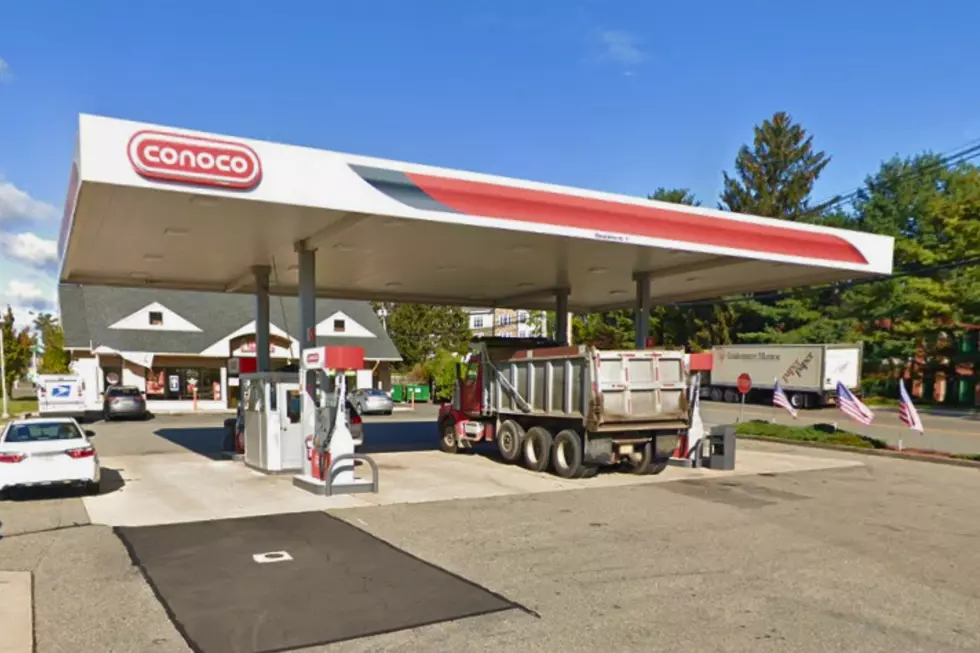
According to prosecutors, six gas stations were robbed between Jan. 21 and Jan. 26, 2022.
In each case, witnesses said there was at least one robber described as a Black male wearing a black face covering in a black BMW X6 SUV.
In this case, a detective obtained a geofence warrant to get location data for Google users who were near three of the gas stations around the time they were robbed. Only one user's location was marked near all the gas stations: Hobbs.
But according to Hobbs' public defender, investigators didn't have a suspect in mind when they applied for the geofence warrants. There was also no evidence that the robber had a cell phone, or that it had a Google account.
In their decision, the appellate judges said investigators can't broadly search Google's database of location information simply because most people have cell phones.
"If it did, police could seek geofence warrants in virtually every criminal investigation. That would drain the probable-cause requirement of meaning. Although probable cause is a low threshold, law enforcement cannot guess or root their assertions in broad generalizations," the judges said.

Hobbs pleaded guilty after judge allowed evidence
Hobbs pleaded guilty to three counts of first-degree robbery and was sentenced to 11 years in state prison. But that was only after a trial judge ruled that the location data could be used against him.
Now, the appellate division has thrown out key evidence detectives and prosecutors used against him.
Hobbs remains held at New Jersey State Prison; his guilty plea and sentence stand while public defenders decide next steps.
Report a correction 👈 | 👉 Contact our newsroom
BEEP BEEP BEEP: These are the 13 types of Wireless Emergency Alerts auto-pushed to your phone
Gallery Credit: Dan Zarrow
Which states have the most expensive electric bills?
Gallery Credit: New Jersey 101.5
More From New Jersey 101.5 FM