
The rise and fall and return of traffic circles in New Jersey
Growing up in New Jersey, learning to drive through a traffic circle is a rite of passage. I apologize if bringing back that memory is causing a bit of PTSD.
I remember my first time entering the circle near the old Atlantic City Race Course, just outside Mays Landing. Then there was the Cardiff Circle farther east on the Black Horse Pike — and a little past that, the Shore Mall Circle.
Surviving South Jersey's most notorious circles
The advanced course for us South Jersey kids? Navigating the monument circle in Atlantic City or the Somers Point Circle — especially in the peak of summer! Much credit to my mom, who taught me how to drive through these panic-inducing contraptions. She must’ve been braver than a war hero and had the patience of a saint!
A brief history of New Jersey’s traffic circles
At one point, New Jersey had over 100 traffic circles. The earliest — and the first in the entire country — was the Airport Circle in Pennsauken, built in 1925. Back when speeds were slower and roads far less crowded, circles were seen as an efficient way to handle intersections of three or more roads in suburban and rural areas.
But post–World War II, more people moved to the suburbs, and vehicles began traveling at faster speeds. The old traffic circles didn’t keep up with these new conditions. They confused out-of-towners, caused backups, and were prone to accidents. What once seemed efficient had become outdated.
By the 1970s, NJDOT began phasing them out. Among the casualties were the Marlton Circle and the Berlin Circle. Across the state, circles were replaced with signaled intersections and overpasses.
SEE ALSO: How to navigate a NJ traffic circle in 5 simple steps
Roundabouts return to New Jersey roads in 2025
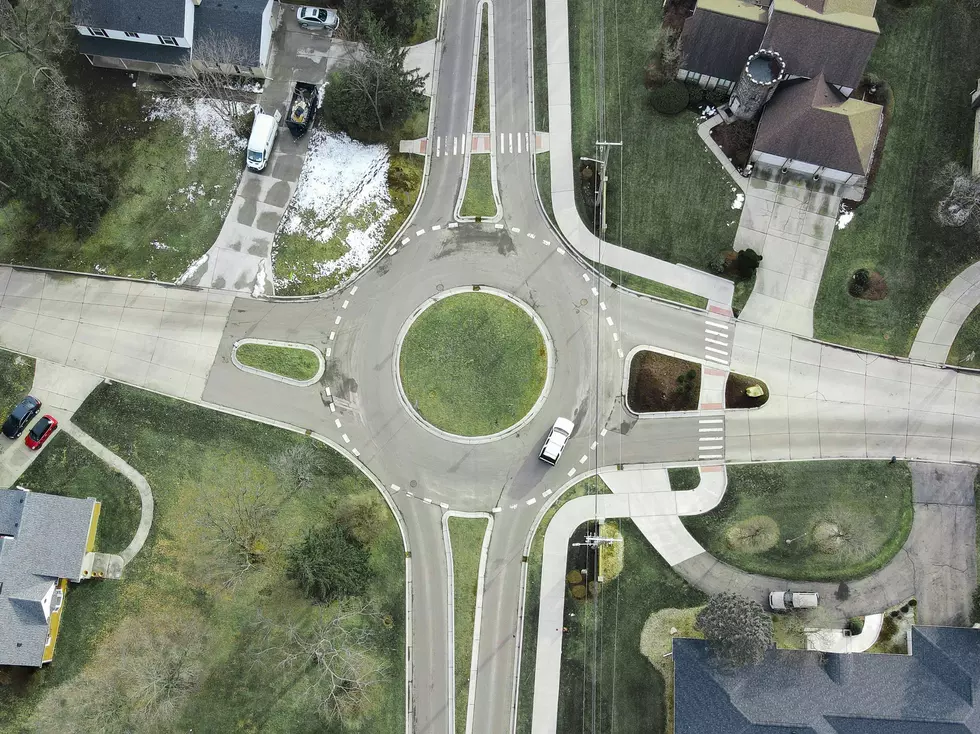
But now, in 2025, circles are making a comeback — though not the old, oversized circles on four-lane highways. The modern version is called a roundabout, and many New Jersey motorists are surprised to encounter one. I know I was — especially since I thought circles were being eliminated little by little.
Modern roundabouts are smaller, usually single- or double-lane, and designed for much slower speeds. Drivers must yield upon entering, typically traveling no faster than 25 miles per hour. According to the Federal Highway Administration, these new roundabouts are a safer solution, reducing serious crashes at intersections due to their design and enforced lower speeds.
Jersey drivers face a full-circle moment
Once again, New Jersey is leading the way — just as it did nearly a century ago. We were pioneers of the traffic circle, and now we’re embracing the safer, yield-controlled roundabout.
Personally, I’m happy to see them return. Traffic circles are as much a part of our Jersey culture as pizza, pork roll, the Pine Barrens — and, of course, not pumping our own gas!
How to get from Monmouth/Ocean to the Holland Tunnel without paying tolls
Gallery Credit: Joe Votruba
More From New Jersey 101.5 FM