
NJ strengthens law protecting reproductive and gender affirming healthcare
⚠️ Gov. Mikie Sherrill signed a new law expanding New Jersey's health care shield protections.
➡️ The law adds gender-affirming care to the state's existing shield law protections.
🔴 The legislation takes effect immediately and creates new protections for patients and providers.
New Jersey now has a stronger “firewall” of legislation protecting both patients and providers of reproductive healthcare and gender affirming care.
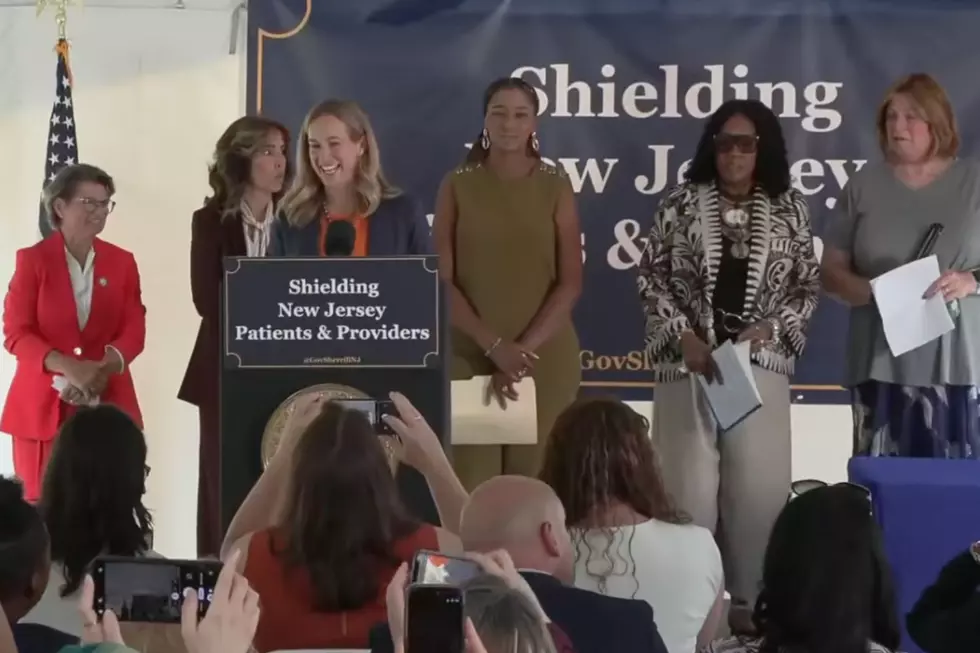
On Thursday, Gov. Mikie Sherrill signed S2260-A2218 into law, under a canopy outside the Planned Parenthood offices in Montclair.
She was joined by many of the democratic lawmakers who passed the measure along partisan lines in June.
New Jersey expands shield law to cover gender-affirming care
The legislation also expands the state’s existing Shield Law protections to cover gender-affirming care, protecting patients and providers from “malicious out-of-state legal actions.”
“The attack on reproductive healthcare is literally killing women,” Sherrill, a mother of four children, said.
“The maternal death rate in states that have restricted abortion is 62% higher than it is in states like New Jersey - this is a national emergency,” she added.
She spoke about several cases where providers have been afraid to act, in states enforcing full abortion bans, like Texas. A number of women have died while seeking care for miscarriages and other unavoidable pregnancy complications — some while being unattended to in hospitals.
Severe bleeding after childbirth — postpartum hemorrhage — has been the leading cause of maternal deaths world-wide, according to the World Health Organization.
According to a study published in the American Journal of Public Health in April, researchers found a possible 9.2% increase in pregnancy-associated deaths in states with abortion bans, equivalent to an estimated 68 excess deaths by the end of 2023.
Read More: NJ sees OBGYN resource strain, due to other states' abortion laws

The law adds new protections for reproductive healthcare patients and providers:
▪️making it a crime to injure, threaten, intimidate, or physically block patients or providers, or to damage property in an effort to interfere with reproductive healthcare services
▪️allowing patients and providers to take legal action against individuals who interfere with their access to or delivery of protected care.
▪️protecting healthcare providers from professional penalties or adverse actions involving their medical malpractice insurance for providing legal reproductive healthcare in New Jersey
New shield law protections cover patient information and licenses
The legislation also expands New Jersey’s shield laws by expressly including gender-affirming care in the definition of protected reproductive healthcare services, such as:
▪️Protecting patient information related to reproductive healthcare from disclosure without prior authorization, under law
▪️Restricting state entities from assisting certain out-of-state investigations or legal proceedings that seek to impose liability for providing or receiving protected reproductive healthcare
▪️Protecting professional licenses by preventing licensing boards from taking action against a provider solely for providing protected reproductive healthcare
“No one should fear intimidation or violence for seeking healthcare, and no healthcare professional should fear punishment from another state for providing care that is legal in New Jersey,” Sherrill said in a written statement following the signing ceremony.
“With this legislation, we are making clear that New Jersey will protect patients, providers, and the fundamental freedom to make personal healthcare decisions.”
Sponsors of the legislation include Senate Majority Leader Teresa M. Ruiz and Senate President Nick Scutari, along with Assemblymembers Shanique Speight, Ellen Park, Annette Quijano, and Luanne Peterpaul.
The legislation takes effect immediately.
NJ lawmakers call new protections a defense against out-of-state action
“Often in the face of fear and uncertainty, parents, medical professionals, and patients of all ages bravely shared their experiences to remind New Jersey of the humanity at the heart of this law — that no matter our differences, everyone deserves access to the care they need without harassment, and no doctor should face punishment for providing lawful treatment,” Senate Majority Leader M. Teresa Ruiz, D-Essex, said in a written release, saying that the signing marks the culmination of "two years of relentless advocacy and courage."
“These are deeply personal decisions that should be made privately — not criminalized, politicized, or reduced to a culture-war talking point. Every person deserves control over their own body, and I thank Governor Sherrill for being an ally in the fight to advance health equity, defend individual liberties, and protect the freedom to seek and provide care without fear,” Ruiz added.
“Through our work in the Legislature we have made it abundantly clear that in New Jersey health care decisions belong to patients and their families and I commend each of the sponsors for their hard work and thoughtful leadership,” Assembly Speaker Craig J. Coughlin, D-Middlesex, said in the same joint release.
“Health care decisions belong to patients and their providers," Assemblywoman Shanique Speight, D-Essex, said in the same release.
"By establishing safeguards for those involved in the provision of reproductive health care services, this reinforces New Jersey's commitment to ensuring access to essential care and preventing barriers that can disrupt the delivery of legally protected health services.”
“Protecting reproductive freedom means ensuring patients can access care safely and without interference, and providers can deliver that care without risking their freedom or professional license,” The Reproductive Freedom Alliance Executive Director Christina Chang also said in the joint release.
How your town in NJ voted for governor in 2025
Gallery Credit: New Jersey 101.5
Report a correction 👈 | 👉 Contact our newsroom
LOOK: What major laws were passed the year you were born?
Gallery Credit: Katelyn Leboff
More From New Jersey 101.5 FM