It’s time for America to stop treating Russia as our ‘Permanent’ Enemy (Opinion)
President Trump told the Ukrainian president to stop striking Russian diesel facilities because those attacks are contributing to a global fuel shortage.
The response from Kyiv? Launching one of the largest strikes of the war, with more than a thousand drones targeting areas in and around Moscow, and gloating about it on social media.
Before the strikes it occurred to me that if Washington is going to micromanage individual targets, the President could use that same leverage to end the war.
With an estimated two million casualties (killed, wounded, missing) on both sides in the war so far, it's long past the time to bring this to an end.
The sheer arrogance of the Kyiv government, propped up by EU and American funding, is largely based on the Western view of Russia being the perpetual 'bad guy.'
Though a deeper dive into the history of this and prior conflicts show, at the very least, that there are several bad actors in this one.
Let me set the premise by saying that the entire issue of the Donbas region should have been handled in a similar way to the Crimea issue.
Crimea is more complicated than the headlines suggest
Crimea’s modern dispute is rooted in the collapse of the Soviet Union.
The peninsula had been part of the Russian Soviet republic until 1954, when Soviet authorities transferred it to the Ukrainian Soviet republic, an internal administrative move whose international significance changed dramatically when the USSR dissolved and Ukraine became independent in 1991.
Russia recognized Ukraine’s borders, including Crimea, but the peninsula retained a Russian-speaking majority and housed Russia’s Black Sea Fleet at Sevastopol.
After Ukraine’s government was overthrown during the 2014 Maidan uprising, Russian forces moved rapidly to secure Crimea; local authorities then held the March 16 referendum, officially reporting overwhelming support for joining Russia, and Moscow formally incorporated the peninsula days later.
Ukraine and most Western governments regard that sequence as an illegal military seizure and annexation, while Russia describes it as reunification carried out through self-determination, a clash between territorial sovereignty and the expressed preferences of much of Crimea’s population that remains central to any negotiated end to the war.
Donbas and Crimea have large Russian-speaking populations, although language alone does not establish political loyalty or Russia’s legal claim to the territory.
Ukraine’s borders have changed repeatedly through history, and a negotiated settlement may require territorial compromise, but any change should be agreed through diplomacy, not legitimized merely because Russia invaded.
Remember, since the annexation, Crimea has not experienced a broad popular uprising or sustained civil unrest against Russian control, and Russian forces are not confronting anything resembling a mass insurgency among the peninsula’s residents.
Independent polling shortly after the referendum also indicated substantial local acceptance: Pew Research Center reported that 91% of Crimeans surveyed believed the referendum was free and fair, while 88% believed Kyiv should recognize its result.
That does not settle the legal question, and documented repression, particularly involving Crimean Tatars and outspoken pro-Ukrainian residents, makes present-day opinion difficult to measure freely.
The available evidence suggests that a significant portion of Crimea’s population accepted, or actively supported, becoming part of Russia.
Donbas, principally the heavily industrialized, largely Russian-speaking Donetsk and Luhansk regions, became the center of the conflict after the 2014 removal of President Viktor Yanukovych, an event Moscow portrays as a Western-backed coup.
The leaked Nuland–Pyatt telephone call plainly showed senior American officials attempting to influence Ukraine’s political outcome, although it does not establish that the CIA directed the Maidan uprising itself.
It's clear that some of the 'war-mongering' politicos, like the now-deceased Senator Lindsey Graham, were more than happy to encourage the ‘politics of disruption.'
Prominent American politicians involved themselves in Ukraine’s 2014 political crisis.
Senator John McCain traveled to Kyiv, appeared before the "Maidan" protesters and said the United States supported their “just cause,” while also calling for a “peaceful transition” in Ukraine.
Senator Lindsey Graham likewise pushed for a tougher U.S. posture toward Russia and backed Ukraine’s westward alignment.
Yanukovych later fled Kyiv and parliament voted to remove him, an outcome supporters called a democratic revolution while Russia and many of us in America who believe we had no business getting involved called it a "coup."
It came as no surprise that Russian-speaking separatists rejected the foreign meddling and the installation of a new government.
The reaction from the new government?
Artillery shelling of civilians.
That's right, after American political leaders played a role in upending the former, duly elected President in Ukraine, the new government in Kyiv launched what it called an “anti-terrorist operation”; Ukrainian shelling killed civilians.
This included at least 16 deaths in attacks that Human Rights Watch attributed to Ukrainian forces and allied militias.
The UN ultimately recorded 3,404 civilian deaths in the Donbas conflict through 2021.
During those years, Moscow supplied the separatist territories with military and economic support and directly financed pensions, government salaries and essential public services.
Russia casts its involvement as protecting a threatened Russian-speaking population, which is supported by the evidence, while Kyiv and Western governments ignore the facts on how the conflict actually started and simply paint the Russians as the aggressors, saying Russian intervention was only intended to divide Ukraine.
Let's not forget that hundreds of thousands, estimates of approximately 800,000, Ukrainians fled the war by crossing into Russia instead of fleeing the advancing Russian forces and moving further into Ukraine.
This is reported by the UNHCR, which is the United Nations Refugee Agency.
America and Russia have been stuck in a Cold War mindset
America’s relationship with Russia has been in conversation for many decades.
Since the fall of the communist Soviet government in Moscow and the rise of the Russian Federation, many can’t shake the Cold War perspective that ‘Russia’ is our ‘permanent' enemy.
Seems to me that the threats from Communist China and the rapid rise of dangerous Islamist nations should be our priority and shape much of our foreign policy.
As far as the Russians, they have the potential to be among our strongest allies against these two known enemies.
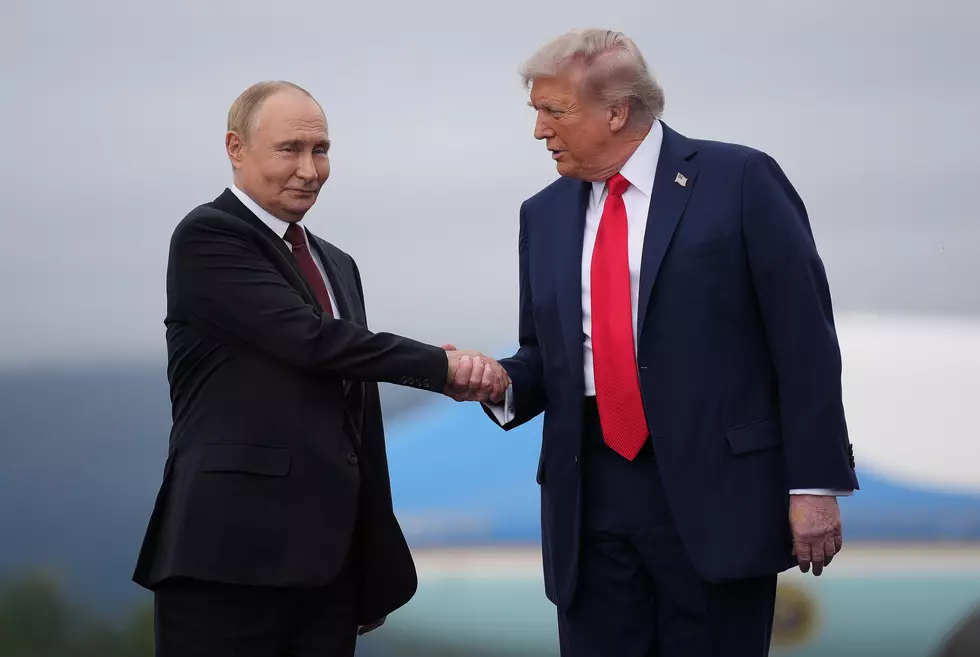
Back in 2018, after President Donald Trump’s summit with Vladimir Putin in Helsinki and the prospect of a second summit, I appeared on Fox News to discuss the political firestorm surrounding Trump’s willingness to engage directly with the Russian president.
I also discussed why it was critical to world peace and American security that the President ignore the political noise and continues the diplomacy.
My point then was part of a larger argument I’ve made for years: America does not benefit from treating Russia as a permanent enemy.
That doesn’t make Vladimir Putin the good guy.
It doesn’t excuse some of the human rights abuses reported from the war in Ukraine, and it certainly doesn’t mean America should blindly accept whatever Moscow demands.
It is clear that throughout history, America has made some strong alliances with so-called "strong men" and governments that do not necessarily meet our standards of human rights and protection of liberty.
It also means we should understand history, recognize America’s strategic interests and stop pretending every complicated international dispute can be simplified to one 'good guy' and one 'bad guy.'
This is clearly what has been going on with the Ukraine/Russia war.
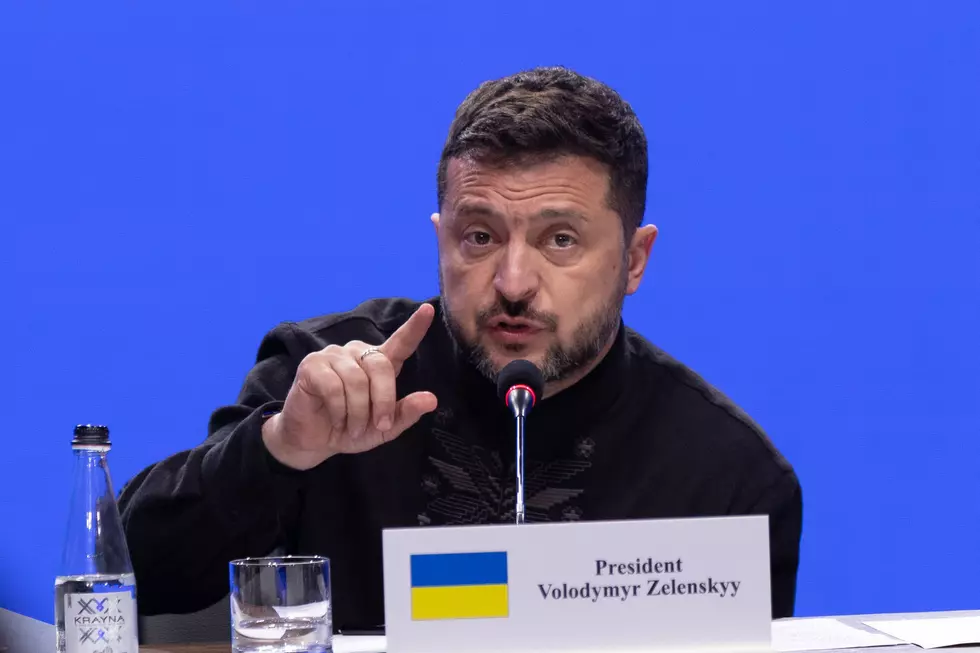
Zelenskyy is heralded as a hero fighting for his people and Putin is sometimes compared to 'Hitler'.
This is not productive for international affairs; if you believe we should be ending the 'forever war' culture that has gripped Washington politicos on both sides of the aisle for decades.
It is also not an accurate nor realistic portrayal given evidence and current history.
First of all, history matters.
The territory we now call Ukraine has a complicated history.
History matters when deciding how this war ends
For centuries, portions of modern Ukraine were governed by different empires and states, including the Polish-Lithuanian Commonwealth, Russian Empire, Austro-Hungarian Empire and eventually the Soviet Union.
Ukraine’s borders also changed considerably during the 20th century.
Crimea provides perhaps the most obvious example: It became part of the Russian Empire in 1783.
Under the Soviet Union, Crimea was part of the Russian Soviet republic until 1954, when Soviet authorities transferred it to the Ukrainian Soviet Socialist Republic.
At the time, both Russia and Ukraine were constituent republics of the USSR. There was no international Russia-Ukraine border running between them.
That changed dramatically when the Soviet Union collapsed.
In 1991, Ukrainians overwhelmingly voted for independence, and Ukraine emerged as a sovereign country within the borders of the former Ukrainian Soviet Socialist Republic.
And this point needs to be stated clearly: Russia recognized those borders.
The countries forming the Commonwealth of Independent States agreed in 1991 to respect one another’s territorial integrity and existing borders.
Russia again committed to respecting Ukraine’s sovereignty and existing borders in the 1994 Budapest Memorandum, under which Ukraine gave up the nuclear weapons remaining on its territory after the Soviet collapse.
Russia and Ukraine later went even further.
In 2003, Presidents Vladimir Putin and Leonid Kuchma signed a treaty formally defining the Russian-Ukrainian state border.
So, acknowledging the complicated history of these territories should not be confused with saying Russia had a legal right to invade Ukraine and redraw its border by military force.
It didn’t.
Understanding that history is essential if we’re serious about figuring out how this war finally ends.
If you look at the history of the US-supported coup and the fact that Kyiv was shelling civilians; add that to the 'saber-rattling' from the Biden Administration over expanding NATO, the Russian reaction isn't really that hard to understand.
Zelenskyy and Ukraine are also far from being the ‘good guys.' Kyiv’s conduct cannot be exempt from scrutiny.
Ukraine has compulsory mobilization, and credible reports describe coercion, violence and corruption surrounding some recruitment operations.
Civilians in Donetsk and other parts of the Donbas region were also killed by shelling during the conflict that began in 2014.
The United Nations documented abuses and civilian casualties involving both Ukrainian forces and Russian-backed armed groups.
That history does not excuse Putin’s 2022 invasion, but it does expose the dishonesty of portraying the conflict as a simple story with one entirely innocent government.
The 2014 uprising can certainly be described as Western-supported—although not specifically a “CIA-backed coup."
The fact remains, Washington openly supported Ukraine’s pro-Western/anti-Russia movement, even though there are questions about the direct role, if any, the CIA played in the removal of President Yanukovych.
The larger point stands: this war has a complicated history, the current battlefield strategy is killing civilians without producing victory, and American leverage should be used to negotiate an end.
The question is what America gets out of this war
War is deadly and profitable.
Billions of dollars are being spent on weapons that continue to destroy communities and kill innocents.
The military-industrial complex, a warning from President Dwight Eisenhower, benefits greatly from the endless war culture.
Ask yourself, is Russia really our main enemy?
Have they not shown restraint by only occupying disputed territory and not using the vast arsenal of weapons of mass destruction to end the conflict?
I’ve spoken to a number of military experts on Newsmax who have reported how some Russian military generals are pushing Putin to be a lot more aggressive.
President Trump has a relationship with the Russian president and has announced that the Russians are ready to move to end the war as long as Ukraine agrees to an adjustment in the border.
From the perspective of history and achieving a lasting peace where both the West and the Russians feel more secure about avoiding a future war, the borders will simply have to change.
It’s been more than a year since Both the US and Russia pointed out that Zelenskyy is blocking the peace agreement.
Even as recently as last week, Zelenskyy remains defiant and is continuing to escalate the war.
He is aggressively sending young people to the front as cannon fodder while enjoying the cover offered by supportive ‘war hawks’ in the EU and in Washington who continue to pour billions of dollars into the Kyiv military action.
To what end is this continuing? To allow Kyiv to maintain the arbitrary border in Donbas?
That seems a small prize with an enormously high price.
What's interesting is that most of the people in the Donbas region speak Russian, and the calls for independence go back to Russia annexing Crimea after the people voted overwhelmingly in favor of integration with Russia.
Why did the US not facilitate a similar vote in Donbas?
Why fund the reckless and destructive killing of civilians and the threatening of Ukraine's nuclear neighbor?
Russia never indicated it wanted to take all of Ukraine. They made a very strong argument to protect the Russian speakers who were endangered by the actions of the regime in Kyiv.
Many have said, including me, that had Donald Trump won the 2020 election, war would not have happened.
Any reasonable person can see that this cannot simply be described as a Ukrainian attempt to stop the Russians from taking Europe, that's an unfounded assumption as Russia has not indicated any such thing, in words or actions.
Claiming Putin intends to conquer all of Ukraine and then march across Europe contradicts the fact that the war itself could easily be looked at as provocation from the West, given the coup and the noise about expanding NATO.
Putin has repeatedly denied any intention to attack NATO countries.
In 2024 he said Russia had “no interest” in invading Poland, Latvia or elsewhere and separately said Russia had no designs on Poland, the Baltic states or the Czech Republic.
His publicly stated war aims and negotiating demands have instead centered on Ukrainian neutrality, NATO membership and Russian control of Crimea and four Ukrainian regions.
Although, those demands themselves involve substantial Ukrainian territory and have been rejected by Kyiv as unacceptable.
Russia’s actions therefore provide ample grounds to criticize Moscow’s territorial ambitions inside Ukraine, but the further assertion that Putin has announced a plan to conquer the rest of Europe is not supported by his public statements or actions.
In December 2025, he again said, “We are not planning to fight Europe.”
Put simply, Ukraine's post-2014 history is more complicated than a simple good-versus-evil narrative.
Washington openly involved itself in the 2014 crisis; civilians were killed by their own government.
Crimea had substantial pro-Russian sentiment, which may be exactly the case in Donbas, and Putin's public statements and actions do not paint a picture of Moscow looking to rebuild the empire by conquering all of Europe.
So here we are: The European Union leaders and the war hawks in DC are essentially running a 'proxy war' that puts a nuclear superpower in a potentially desperate position, enriches the weapon makers and has claimed approximately two million casualties so far.
The Ukrainian President is openly defying the President of the United States, continuing to escalate the conflict by bombing targets in Moscow.
Trump has rightly indicated that this is a major contributor to the spike in diesel prices, impacting working and middle-class families across the US.
As an American, I'm not interested in paying more or sacrificing one American service member on the altar of maintaining the illusion that the Cold War is still our reality.
As a Ukrainian-American, I want to see the madness resulting in millions of casualties come to an end.
This European conflict was avoidable and entirely preventable, and we do not belong in the middle.
Redraw the border, put the Donbas region to a Crimea-style vote and end the war.
Then we can turn our attention to a practical, real-world alliance with Putin (without making him a good guy) and help keep our real enemies in check.
The Chinese communists and the radical Islamists, both of which already have a strong foothold within our borders, are our real enemies.
Let's focus on protecting America and Americans before it's too late, and maybe, just maybe, we should avoid 'World War Three' starting over a disputed and insignificant border in Ukraine.
The post above reflects the thoughts and observations of New Jersey 101.5 talk show host Bill Spadea. Any opinions expressed are Bill's own
Here are 9 Farm-to-Table Restaurants to Check Out in the Garden State
Gallery Credit: Jen Ursillo
The post above reflects the thoughts and observations of New Jersey 101.5 talk show host Bill Spadea. Any opinions expressed are Bill's own.
More From New Jersey 101.5 FM