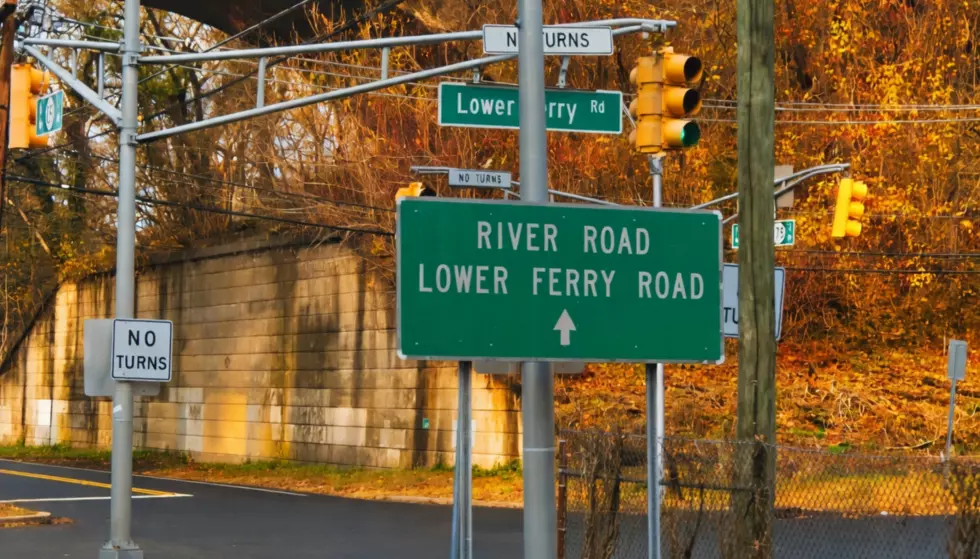
I drive past Lower Ferry Road every day — I found out where it led
Every day I drive to work in Ewing, I pass Upper Ferry Road and Lower Ferry Road without giving them much thought. Just streets. Until you ask the obvious question: ferry to where?
Turns out the answer is real, and it goes back further than I expected.
Trenton once had four separate ferry crossings over the Delaware River, and Upper Ferry and Lower Ferry Roads are named for exactly what they sound like. The Upper Ferry crossed near where the Calhoun Street Bridge stands today, established by a man named George Beatty and in active use around the time of the Battles of Trenton in the winter of 1776-77. The Lower Ferry, also called the Lamberton Ferry, was set up in 1773 by Elijah Bond on the New Jersey side and John Thornton on the Pennsylvania side. For several years it actually outcompeted the main Trenton Ferry and served as the official "Continental Ferry," where soldiers on active duty could cross at a reduced rate.
There was also a Middle Ferry, possibly dating back as far as 1675, crossing just below the falls at the foot of what was then called Ferry Street. And upstream of all of them sat the Yardley Ferry, established in 1683, which ran into the 1830s before bridges made it obsolete.
So the next time you drive Upper Ferry Road into Ewing, you are tracing the same path colonial travelers used to reach the river, back when the only way across was a flat-bottomed scow pulled by rope, pole, or muscle.
SEE ALSO: The Margate Bridge toll is going up — and it still doesn't take EZ Pass

The bridges that ended the ferries
Trenton's ferry era began closing in 1806, when the first bridge ever built across the Delaware opened between Trenton and Morrisville — a covered wooden span with laminated arches, engineered by Theodore Burr, the same man who later designed the first bridge over the Hudson River. That structure eventually gave way to what we now call the Trenton Makes Bridge, still standing, still carrying its famous slogan. Once a fixed bridge existed at a crossing point, the ferry there usually did not last much longer — a pattern that repeated up and down the entire river for the next century and a half.
Camden to Philadelphia
Camden's very existence traces back to ferry service. Cooper's Ferry, running between what became Camden and Philadelphia's Market Street, was operating as early as 1687 and effectively founded the city around it. By the 20th century, Camden had ferry slips at Market Street, Vine Street, and Kaighn Avenue, with additional crossings from Gloucester City, Palmyra, and Burlington City. That whole fleet began disappearing once the Delaware River Bridge — later renamed the Benjamin Franklin Bridge — opened in 1926, followed by the Tacony-Palmyra Bridge in 1929.

Chester to Bridgeport
The Chester-Bridgeport Ferry opened with real fanfare in 1930 — roughly three thousand people at the dedication, cars lined up a mile deep to be first across, the mayor of Chester calling it the happy ending of a decades-old dream. It ran for 44 years, marketed to motorists as a way to avoid Philadelphia traffic on the way to the Shore. When the Commodore Barry Bridge opened in 1974, it made its final run and shut down for good.
New Castle to Pennsville
Further south, a ferry connected New Castle, Delaware to Pennsville, New Jersey, run for decades by lines with names like the Wilson Line and the White Line. It was popular enough that a local meat market reportedly sold millions of hot dogs a year to waiting ferry customers, and New Jersey teenagers rode it over just to spend a day at the old Riverview Beach Amusement Park. That crossing lasted until August 1951, when the Delaware Memorial Bridge finally opened and ended the ferry era at New Castle for good.

What's still running today
Of everything that once crisscrossed this river, only one true car-and-passenger ferry survives: the Cape May-Lewes Ferry, still carrying vehicles across the mouth of the Delaware Bay the way ferries have done here since the 1600s. Everything else — Trenton's four crossings, Camden's fleet, Chester-Bridgeport, New Castle-Pennsville — got replaced by steel and concrete, one bridge at a time.
Next time you're stuck in traffic on the Commodore Barry or crossing the Ben Franklin, remember that someone's great-grandfather made that same trip on a wooden scow, watching for ice floes, hoping the current wasn't too strong that day. And the next time you turn onto Upper Ferry Road here in Ewing, you'll know exactly what it used to lead to.
I'll do a future article that covers the ferries from Ewing and on to the north on the Delaware.
The 10 free bridges from New Jersey to Pennsylvania (and vice versa!)
Gallery Credit: Joe Votruba
More From New Jersey 101.5 FM