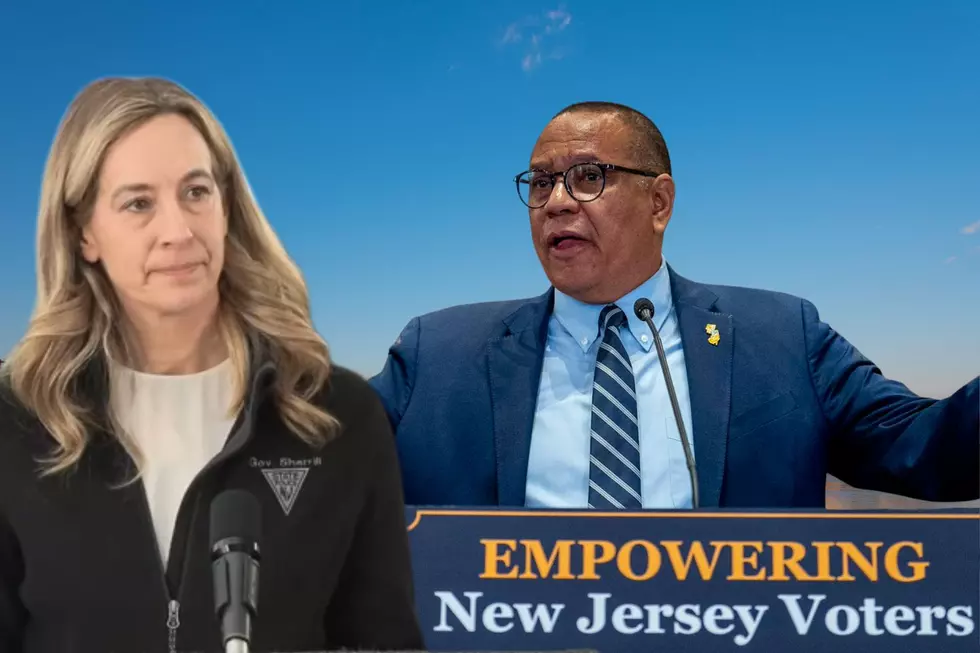

Could Sherrill fire Caldwell? NJ scandal collides with the Constitution
⚖️ Sherrill can't simply fire Caldwell as lieutenant governor: He holds an elected constitutional office and could resign or face impeachment.
🏛️ Impeachment would take 41 Assembly votes and 27 Senate votes: Sherrill cannot remove Caldwell from elected office on her own.
❓ Secretary of state is the legal wild card: Sherrill may have power to remove Caldwell for cause, but his dual role could trigger a court fight.
The investigation hanging over New Jersey's lieutenant governor
An investigation into Lt. Gov. Dale Caldwell has put Gov. Mikie Sherrill in an extraordinary position: What happens if investigators conclude her hand-picked running mate engaged in misconduct?
Caldwell is the subject of an outside investigation into allegations involving inappropriate behavior with women and potential ethics violations. Former New Jersey Attorney General Christopher Porrino and his law firm, Lowenstein Sandler, were retained to conduct the investigation, which has reportedly been underway since June.
Caldwell has not been charged with a crime, and the allegations remain allegations. The investigation has also drawn pushback from Caldwell supporters, who say people with firsthand knowledge of some events referenced in the allegations have not been interviewed.
Sherrill has been careful not to publicly prejudge the outcome.
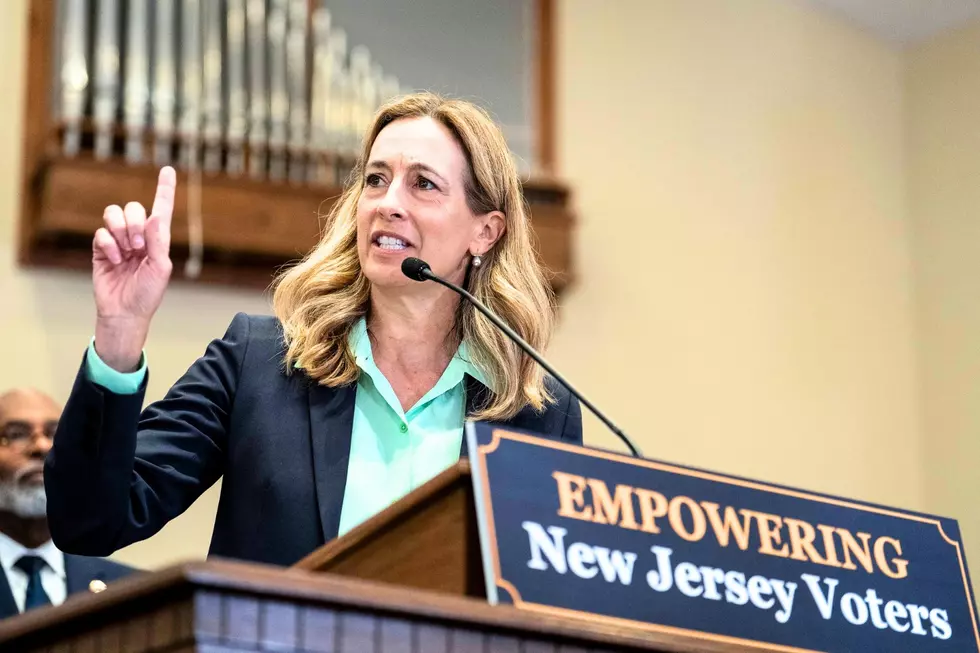
"If the evidence warrants," the governor said in a statement, "I will take appropriate action quickly."
What can Gov. Sherrill actually do to Dale Caldwell?
That raises a deceptively complicated question.
What exactly is "appropriate action" — and how much power does Sherrill actually have over her lieutenant governor?
The answer depends on which of Dale Caldwell's two jobs we're talking about.
Caldwell is both New Jersey's lieutenant governor and secretary of state. Sherrill selected him as her running mate, but New Jersey voters elected Sherrill and Caldwell together.

That means she cannot simply fire him as lieutenant governor.
The New Jersey Constitution establishes the lieutenant governor as an elected constitutional officer serving a four-year term. Sherrill could ask Caldwell to resign — and could presumably exert considerable political pressure on him to do so — but the governor does not have the same power to fire a lieutenant governor that she generally has over members of her Cabinet.
Could Dale Caldwell be impeached?
Yes.
The New Jersey Constitution gives the General Assembly the sole power to impeach state officers for misconduct committed while in office.
It takes a majority of the entire Assembly — at least 41 of its 80 members — to impeach.
An impeachment would then move to the state Senate for a trial. Conviction requires the support of two-thirds of the entire Senate — 27 of 40 senators.

A conviction can result in removal from office and disqualification from holding another public office of honor, profit or trust in New Jersey.
So if the Caldwell investigation were to reveal sufficiently serious misconduct and he refused to resign, impeachment is one constitutional mechanism lawmakers could pursue.
Impeachment by the Assembly does not automatically mean Caldwell would have to leave office. His forcible removal would require conviction by the Senate.
Sherrill herself could not impeach or convict him.
There is another potential path, although it is not immediately available.
New Jersey voters have the constitutional power to recall elected officials after they have served at least one year in office. State law requires a petition signed by at least 25% of registered voters in the official's jurisdiction before a recall election can be held.
Because Caldwell has not yet completed a year as lieutenant governor, a recall election could not be held now.
Could Sherrill fire Caldwell as secretary of state?
This is where things get considerably more complicated.
New Jersey's Constitution specifically allows a governor to appoint the lieutenant governor as secretary of state without Senate confirmation. That's what Sherrill did with Caldwell.
Unlike most Cabinet officials, however, the secretary of state does not simply serve "at the pleasure of the governor." The Constitution says the secretary of state serves during the governor's term.

The Constitution also gives the governor broad authority to investigate the conduct of state officers and, after notice, charges and an opportunity for a public hearing, remove certain officers "for cause."
A 2005 legal opinion from New Jersey's nonpartisan Office of Legislative Services concluded that the governor could use that authority to remove the secretary of state for cause.
But there's a wrinkle.
That opinion came before New Jersey created the office of lieutenant governor and amended the Constitution to allow the lieutenant governor to simultaneously serve as secretary of state.
That leaves a largely untested question: Could Sherrill remove Caldwell as secretary of state while Caldwell remains the elected lieutenant governor?
There doesn't appear to be a simple, definitive answer, and an attempt to remove Caldwell from the secretary of state's office could potentially end up before a court.

If the investigation produces serious findings, Sherrill could demand Caldwell's resignation from one or both positions. Lawmakers could pursue impeachment of Caldwell as lieutenant governor. And after Caldwell has served the constitutionally required period, voters could potentially pursue a recall.
Sherrill may also have a legal argument that she can remove Caldwell from the secretary of state's office for cause while leaving him in place as lieutenant governor — although that question could be challenged.
What she cannot do is simply say, "You're fired," and unilaterally erase the election that put Caldwell in the lieutenant governor's office.
And that makes Sherrill's promise of "appropriate action" considerably more complicated than it might sound.
Top winners & losers in Gov. Sherrill's first school aid proposal
Biggest layoffs in New Jersey this year
Gallery Credit: Erin Vogt
12 ways New Jersey is making it harder for ICE to operate
Gallery Credit: Erin Vogt
More From New Jersey 101.5 FM