
What is actually in the ocean water at the Jersey Shore
The summer I was thirteen years old, my family spent a week in Ocean City, Cape May County New Jersey. It was 1975. "Jaws" had just come out. The whole country was in a full shark frenzy and my father's cousin had a duplex rental on the beach block and we got to stay for free, which meant we were going whether there was a great white in the water or not.
I went in every single day.
I grew up in Mays Landing, which is about twenty minutes from Ocean City. Where I come from we never called it the Shore — we called it the beach, because we were already kind of at the Shore. Many think anywhere east of the Parkway is the Shore. We just called it Tuesday. But that summer in Ocean City felt different. A week on the beach block. The ocean right there. And somewhere out in that water, if you believed what everyone was saying, something with teeth.
I went in anyway. I have never once had a problem going in the ocean. To me there is nothing better than lying in the sun until you are so hot you absolutely have to get in. That first moment when the cold water hits you — there is no other feeling like it. Nothing comes close.
But I will be honest with you. You do feel things in there. Something brushes your ankle. Something bumps against your calf. You step on something soft and unidentified in the sand. And for just a second, even if you are not a Jaws person, you think — what was that?
Here is what it actually was.
What Is Living Right at Your Feet
In the breaking waves, ankle to waist deep, you are sharing the water with Atlantic silversides — small baitfish that move in schools and feel like a shimmer of silver when they pass through. Striped bass work surprisingly close to shore, especially around dawn and dusk. Bluefish chase baitfish right into the surf. Summer flounder lie buried in the sand waiting for prey, which is almost certainly what you stepped on.
Under your feet in the sand are Atlantic mole crabs, which everyone at the Shore calls sand fleas. My kids called them “little buddies.” Coquina clams. Razor clams. Blue crabs. Various marine worms and tiny crustaceans doing whatever marine worms and tiny crustaceans do, which is mostly mind their own business until a tourist steps on them.
Horseshoe crabs show up in numbers during spawning season and have been doing so on these beaches for roughly 450 million years, which makes them the longest-tenured Shore visitors by a considerable margin.
SEE ALSO: Your complete NJ outdoor guide for the summer of '26
What Is Just Beyond the Breakers
A little further out you get into cownose rays and butterfly rays, which are genuinely beautiful if you see one from a boat and considerably less beautiful if one glides across your foot in waist-deep water. Sand tiger sharks and sandbar sharks are regularly present off the New Jersey coast. They are almost always well outside the zone where people are standing in the surf.
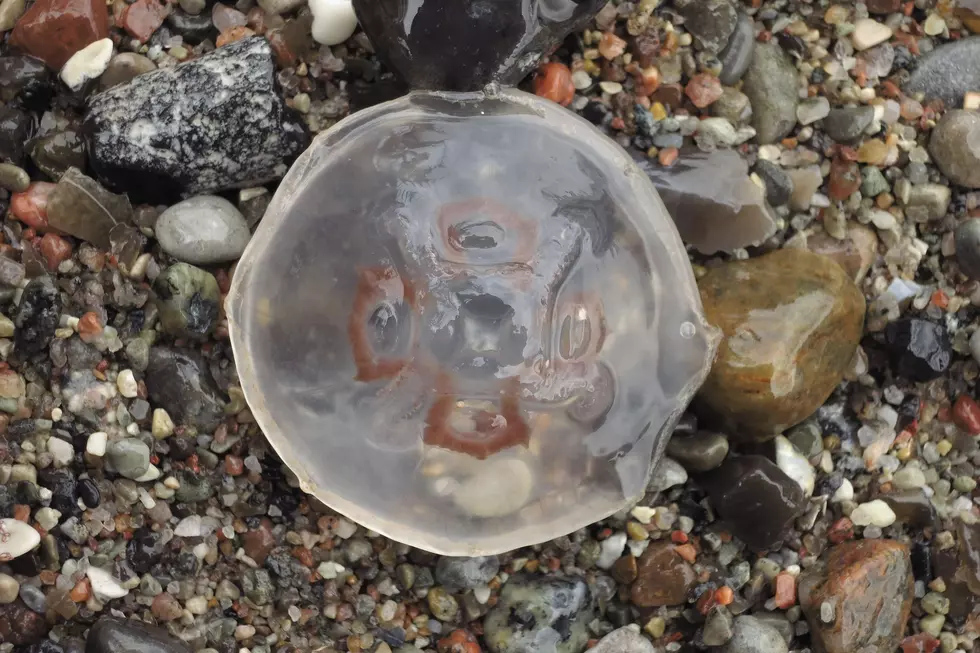
The creatures that actually cause the most unpleasant encounters are jellyfish. Moon jellies, sea nettles, lion's mane jellyfish in the cooler water. If something has ever stung you at the Jersey Shore, it was almost certainly a jellyfish and not anything with a fin.
One thing that surprises a lot of visitors — dolphins. Pods of bottlenose dolphins feed within a few hundred yards of shore regularly, and sometimes right in the surf zone. If you have ever seen a fin and felt your heart rate spike, there is a very good chance it was a dolphin. They always put on a show and everyone stops and stares!
Enter The Evil Under Toad
My parents had one rule when we went in the water. Watch out for the evil under toad.
They meant undertow. Which is really a rip current — a narrow, fast-moving channel of water that pulls away from shore. It is not going to drag you to the bottom. But it will pull you sideways and away from the beach faster than you expect, and if you panic and fight it directly you will exhaust yourself. The right move is to swim parallel to shore until you are out of the current, then swim back in.
We told our kids the same thing. Watch out for the evil under toad. The name stuck. The lesson stuck too.
Rip currents are the actual safety concern at the Jersey Shore. Not what is swimming in the water with you.
The Numbers That Should Settle It
Your lifetime odds of being bitten by a shark are roughly 1 in 3.7 million. Your odds of being killed by a shark are tens of millions to one. You are far more likely to be struck by lightning, which is already vanishingly rare. You have a better shot at winning a major lottery jackpot than being attacked by a shark.
Jaws was a great movie. It was also, in the most measurable way possible, a lie about what the ocean is actually like. Peter Benchley, who wrote the novel, spent the rest of his life advocating for shark conservation because he felt so responsible for the fear his story created. The shark was not the villain. It was just a fish doing what fish do.
What is in the water at the Jersey Shore is mostly small, mostly harmless and mostly indifferent to your existence. Sand fleas. Silversides. The occasional flounder buried in the sand. A jellyfish that does not know or care that it stung you. Dolphins, if you are lucky.
And somewhere just beyond the breakers, going about their business in the deep water where they belong, sharks that have no particular interest in a person standing in waist-deep surf on a Tuesday afternoon in July.
Go in. The water is fine. Just watch out for the evil under toad.
8 sharks you may find off New Jersey's coast
Gallery Credit: Dino Flammia
More From New Jersey 101.5 FM