
My Dad took me on graveyard picnics in the Pine Barrens — and I’ve never gotten over it
I grew up a history buff. Math and spelling — not so much. But history? History always clicked for me. Maybe it was my Dad's influence. I was in middle school when our nation's Bicentennial happened in 1976, and I think that celebration of American history got permanently wired into me at exactly the right age.
My Dad was a genealogist — and a serious one. Long before Ancestry.com and 23andMe existed, he was obsessively researching our family tree the old-fashioned way. Libraries, county records, historical societies, dusty ledgers. Both his mother's and father's families had deep roots in and around the New Jersey Pine Barrens, so a lot of his research brought us into that very special, very strange part of the state.
Graveyard picnics and ghost villages
Some of my most vivid childhood memories are what I call our graveyard picnics — Dad loading up the car and heading deep into the Pines to places like Chatsworth, Green Bank, Lower Bank, and Manahawkin. We'd visit old cemeteries, read the stones, and just absorb the quiet history of places that most New Jerseyans have never heard of.
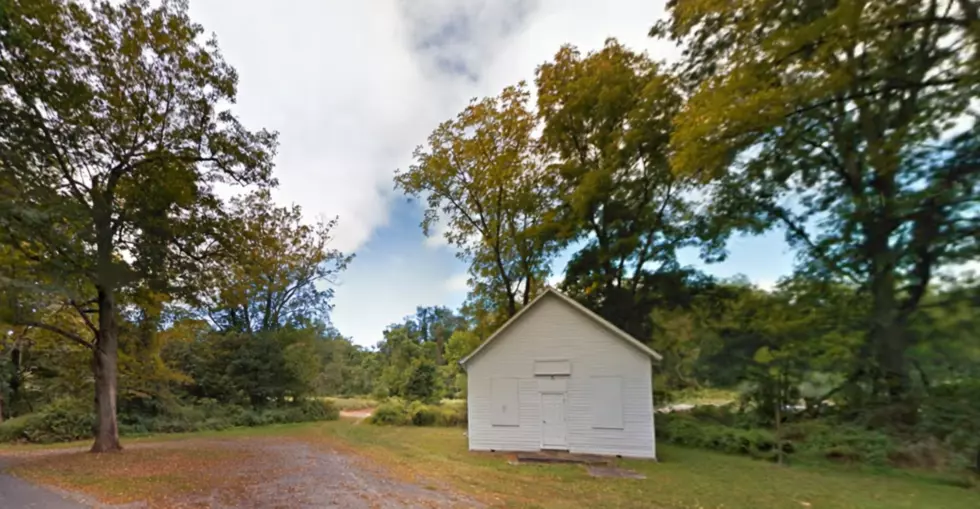
One of those places was Johnson Place — a ghost village just outside Chatsworth, sometimes called its "suburb." You can still find Johnson Place on digital maps today, on both Apple and Google. There's almost nothing left on the ground. But it's there on the map, a faint echo of something that used to be a community with real people and real lives.
Johnson Place is not alone. New Jersey is full of them — forgotten towns with names like Friendship, Hampton Furnace, Sooy Place, Martha, and Jenkins. Most were built around industries that no longer exist: iron furnaces, charcoal production, glassmaking, sawmills. When the industry died, the people left, and the Pine Barrens slowly reclaimed what was theirs.
READ THIS: He found a ghost city in the Jersey woods

New Jersey ghost towns worth finding
Here's a guide to some of the most compelling abandoned places in the state — spread across New Jersey, not just South Jersey — along with coordinates to help you find them.
Batsto Village — Burlington County, Pine Barrens Founded in 1766 as an ironworks that made cannonballs for George Washington's Continental Army, Batsto later became a glassmaking community before the Industrial Revolution ended it. Today 33 historic buildings survive and tours are available. 📍 39.6394° N, 74.6510° W — Wharton State Forest, Washington Township
Feltville / Deserted Village — Union County, Watchung Reservation Built in 1845 by papermaker David Felt who ran it like a personal kingdom — earning him the nickname "King David." After he left in 1860 he reportedly said "King David is dead and the village will go to hell." It briefly became a summer resort before being abandoned for good in 1916. 📍 40.6712° N, 74.3876° W — Watchung Reservation, Mountainside
Allaire Village — Monmouth County A thriving 19th century iron-making community that made household goods and stoves. When cheaper Pennsylvania iron arrived, the village emptied almost overnight. Today it's a living history museum inside Allaire State Park with 13 preserved historic buildings. 📍 40.1637° N, 74.1274° W — Allaire State Park, Wall Township
Waterloo Village — Sussex County A Revolutionary War-era village that became a bustling Morris Canal stop during the Civil War — then went completely silent when the canal was abandoned in 1903. The village sits preserved along the Musconetcong River in the hills of northwest Jersey. 📍 40.9051° N, 74.7238° W — Allamuchy State Park, Byram Township
Weymouth Furnace — Atlantic County Once a successful iron works and later a paper mill community, Weymouth was abandoned in 1887. Grand stone arches, a towering chimney stack, and moss-covered foundations still stand along the Great Egg Harbor River — one of the most hauntingly beautiful ghost town sites in the state. 📍 39.5318° N, 74.7938° W — Weymouth, Atlantic County
Whitesbog — Burlington County, Pine Barrens A former cranberry and blueberry farming village — and actually the birthplace of the cultivated highbush blueberry. The workers' cottages, general store, and collapsed cranberry packing house still stand alongside working bogs that remain active today. 📍 39.9129° N, 74.4774° W — Browns Mills, Burlington County

Ong's Hat — Burlington County, Pine Barrens New Jersey's most mysterious ghost town — little more than a wooded clearing deep in the Pinelands today. The most popular folk legend says a local man named Ong had his silk hat stomped on at a dance and flung it into a pine tree in frustration, where it hung for years as a local landmark. But an actual Ong family descendant wrote to the New York Times claiming the real name was always "Ong's Hut" — a rest shelter his ancestors built during grain-hauling trips through the Barrens — and that the name was simply corrupted on early maps. Either way, Ong's Hat later became ground zero for internet-era conspiracy theories about Princeton scientists conducting interdimensional travel experiments in the woods. Today there's almost nothing left but the legend. 📍 39.8568° N, 74.5579° W — Pemberton Township, Burlington County
Walpack Center — Sussex County Called "the loneliest town in New Jersey" — a tiny village in the Delaware Water Gap condemned by the federal government in the 1970s for a reservoir project that never happened. Residents were forced out. The reservoir was never built. The town just sits there. 📍 41.1048° N, 74.9210° W — Delaware Water Gap National Recreation Area
Where to learn more about New Jersey's forgotten places
If this world interests you — and it should — start with two books. John McPhee's The Pine Barrens, published in 1968, remains the definitive portrait of that singular place and the people who lived in it. And Henry Charlton Beck's "Forgotten" series, written decades earlier, gets you even closer to the times when these towns actually had beating hearts. Both are essential reading for anyone who loves New Jersey's hidden history.
New Jersey has always been more than its reputation. Underneath the turnpike exits and the shore traffic and the property tax bills is a landscape full of stories — quiet, cedar-scented, and waiting for anyone curious enough to go looking.
New Jersey's smallest towns by population
Gallery Credit: Michael Symons
More From New Jersey 101.5 FM