Trump administration unloads on NJ county amid ICE showdown
🚨 Essex County is standing by its new policy limiting cooperation with ICE despite a blistering response from the Trump administration.
⚖️ County leaders say the policy follows the Constitution and still allows cooperation with federal immigration officials when a judicial warrant is presented.
🏛️ DHS argues the policy will make New Jersey less safe by making it harder for ICE to take custody of criminal suspects directly from the county jail.
Essex County refuses to back down after DHS blasts new ICE policy
Essex County officials are refusing to retreat after drawing sharp criticism from the Trump administration over a newly enacted policy that limits cooperation with federal immigration authorities.
The policy, which took effect July 9, restricts Immigration and Customs Enforcement (ICE) and Customs and Border Protection (CBP) access to non-public county property without a judicial warrant or court order. It also bars county resources from being used to assist with civil immigration enforcement, while still allowing coordination with ICE when presented with a valid judicial warrant, judicial order or when otherwise authorized by law.

The move prompted an immediate response from the Department of Homeland Security, which accused Essex County of adopting sanctuary policies that would make communities less safe.
Acting DHS Assistant Secretary Lauren Bis said in a statement that, "Sanctuary policies like this make New Jersey communities less safe."
"In Essex County, instead of notifying ICE law enforcement, sanctuary politicians will RELEASE criminals from jails into New Jersey communities," Bis said. "When sanctuary politicians refuse to cooperate with ICE law enforcement, they put the safety of the public and our officers at risk."
County commissioners defend ICE restrictions
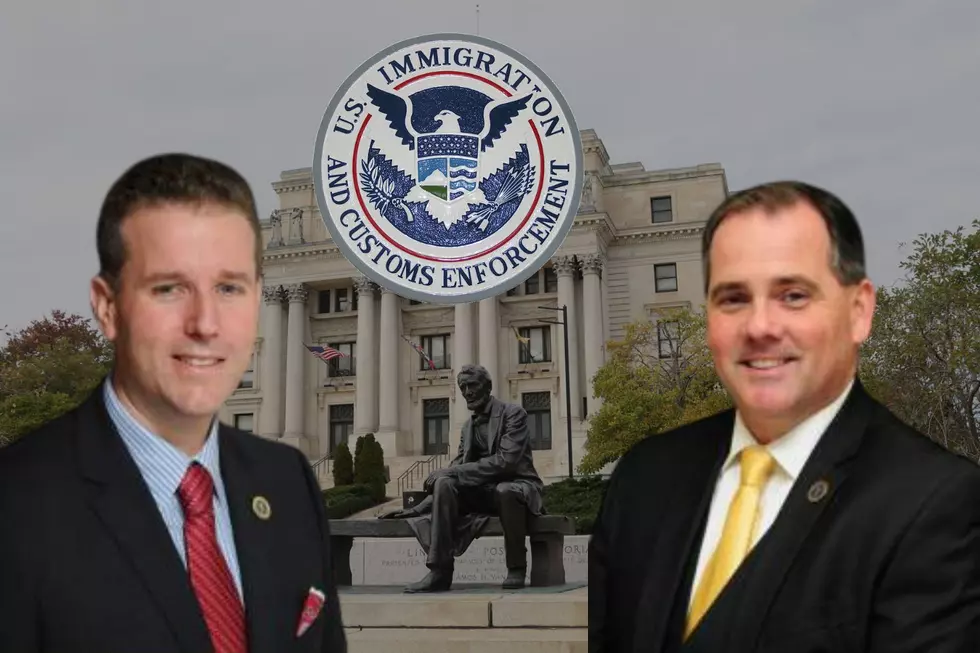
Essex County Commissioner Brendan Gill, who introduced the resolution, said county officials have no intention of backing away.

"The Essex County Commissioners stand by our policy regulating ICE coordination and activities on county property," Gill said.
He argued the measure is fiscally responsible because county taxpayers should not be subsidizing federal immigration enforcement. Gill also said immigrants are a vital part of Essex County's economy and culture, adding that aggressive ICE enforcement discourages law-abiding immigrants from participating in community life.
"The policy reflects our commitment to the Constitution and rule of law," Gill said. "All violent criminals in Essex County are duly prosecuted to the fullest extent of the law, whether they are native-born or otherwise, and county law enforcement coordinates with immigration enforcement when presented with a judicial warrant."
Gill also described the issue as personal, noting he is the husband of a Colombian immigrant and father of two mixed-race children.
"My family has seen firsthand the harm and social division caused by Donald Trump's ICE directives," Gill said. "The Board of County Commissioners will continue to support and welcome all our community members by responsibly enforcing the law and Constitution, and stands opposed to the unchecked violence and intimidation from ICE we have seen across the country."

Debate centers on public safety and immigration enforcement
County Commission President Carlos Pomares echoed Gill's defense of the policy.
"We work very diligently to make all community members feel welcome in our offices and interacting with county agencies," Pomares said.
He said county leaders believe recent ICE enforcement tactics discourage law-abiding immigrants from engaging with local government and community institutions.
"We do not agree with ICE's tactics in this Administration, and we believe they do not conform with the Constitution and do not make our country any safer or more well off," Pomares said.
The dispute highlights the continuing clash between local governments that have adopted sanctuary-style policies and the Trump administration's effort to expand immigration enforcement.
DHS warns policy will force more neighborhood arrests
DHS contends Essex County's policy will make it more difficult for ICE to conduct direct transfers of inmates from the county jail, requiring agents to devote more resources to locating and arresting people after they have been released.
According to the department, that means ICE will increasingly rely on field enforcement operations rather than taking custody of individuals in the controlled environment of a jail. DHS also cited several examples of immigrants previously arrested in Essex County who had been convicted of serious crimes, including sexual assault offenses, as evidence supporting its position.
12 ways New Jersey is making it harder for ICE to operate
Gallery Credit: Erin Vogt
ICE arrests: 'Worst of the worst' in New Jersey
Gallery Credit: New Jersey 101.5
PHOTOS: Clashes with police outside Delaney Hall after protest zone fails
Gallery Credit: The Associated Press
More From New Jersey 101.5 FM